What is an RS485 Bus?
RS485 Bus Core Definition: The RS485 bus is a half-duplex serial communication bus that transmits data via differential signals on two signal lines (A and B). It requires no clock line, resulting in a simple structure and low cost. It boasts strong anti-interference capabilities, a maximum transmission distance of up to 1200 meters, and supports multi-node connections (theoretically 32, expandable via expansion modules). Requires no spectrum licensing and is a core communication carrier for industrial IoT, automation control, and other scenarios.
Key differences between RS485 and RS232:
1. Transmission method: RS485 uses differential transmission, while RS232 uses single-ended transmission;
2. Interference immunity: RS485 has strong common-mode interference immunity and is suitable for harsh industrial environments;
3. Transmission distance: RS485 has a maximum transmission distance of 1200 meters, far superior to RS232;
4. Node connection: RS485 supports multiple nodes, while RS232 only supports point-to-point;
- Suitable scenarios: RS485 is suitable for long-distance multi-device collaboration in industrial settings, while RS232 is suitable for short-distance point-to-point debugging.
Key Parameters of RS485 Bus:
The core parameters of the RS485 bus are as follows, serving as the core basis for bus setup and troubleshooting:
1. Communication Method: Half-duplex, only one node transmits data at a time;
2. Connection Capacity: Theoretically 32 nodes, expandable via expansion modules;
3. Transmission Rate: Hundreds of bits per second to 10 megabits per second, flexibly adjustable;
4. Transmission Distance: Maximum 1200 meters (no repeater required);
5. Interface Identification: A (positive signal), B (negative signal), connections must correspond precisely;
- Adapter Cable: Shielded twisted-pair cable is preferred to reduce interference and signal reflection.
Core Features of RS485 Bus
1. Half-duplex Multi-device Adaptability: Simple structure, supports multi-node bidirectional communication, expandable, reducing cabling and deployment costs;
2. Flexible Speed: Adapts to different transmission needs, low speed is suitable for long distances and small data volumes, high speed is suitable for short distances and large data volumes;
3. Strong Anti-interference: Differential transmission, suitable for harsh industrial environments such as factories and power line inspections, ensuring stable transmission;
4. Long Transmission Distance: Up to 1200 meters without repeaters, reducing cabling workload;
5. Low Cost: Simple accessories and convenient maintenance, suitable for large-scale deployment in small and medium-sized enterprises;
6. Wide Compatibility: Adapts to most industrial equipment, can work with TCP/UDP protocols, and can be directly connected to existing systems.
RS485 Bus Network Architecture
The RS485 bus adopts a bus topology architecture. The core consists of terminal devices, bus cables, terminating resistors, and auxiliary devices. It is deployed in a daisy-chain manner. The core workflow is: deployment and setup → data transmission → troubleshooting.
1. Terminal Equipment: Includes sensors, controllers, etc., equipped with an RS485 interface, serving as a transceiver. The number of nodes affects the bus load.
2. Bus Cables: Shielded twisted-pair cables are preferred. Avoid bending and tangling to prevent signal distortion and attenuation.
3. Termination Resistors: 120 ohms, installed at both ends of the bus to eliminate signal reflection. Improper configuration can easily cause malfunctions.
4. Auxiliary Equipment: Repeaters (extend distance, enhance signal), hubs (expand nodes, reduce collisions), isolators (electrical isolation, anti-interference), bus transceivers (improve drive capability).
Commonly Used Tools
For RS485 Bus The core tools are used for bus setup, maintenance, and troubleshooting, specifically:
1. Troubleshooting Tools: RS485 bus tester (for quickly locating conflicts, signal attenuation, etc.), industrial-grade oscilloscope (for detecting signal waveforms and troubleshooting distortion and interference);
2. Setup and Maintenance Tools: RS485 isolator (for optocoupler isolation and interference prevention), DP connector (for suppressing tributary echoes), shielded twisted-pair cable (dedicated transmission cable), 120-ohm terminating resistor (essential for the bus);
3. Debugging Software: Serial port debugging assistant (such as SSCOM, SecureCRT), for debugging communication and verifying node status; free and open-source.
Common RS485 Bus Faults and Solutions .
The core faults are bus conflicts and tributary issues. Specific causes and solutions are as follows:
- Bus Conflicts Core Causes: Multiple nodes sending data simultaneously, signal reflection attenuation, and improper terminating resistor configuration.
Solutions: Employ master-slave/polling protocols to avoid simultaneous transmissions; standardize cabling and use shielded twisted-pair cables; install 120-ohm terminating resistors at both ends of the bus; select high-drive transceivers and isolators as needed.
2. Branch Issues:Core Cause: Too many/too long branch lines, not deployed in a daisy-chain configuration, generating echo signals.
Solutions: Optimize branch lines using DP connectors or parallel-connector terminals; standardize the connection between the shielding layer and signal ground of shielded twisted-pair cables; use optocoupler isolation and graded protection for interfaces; install repeaters during branch cabling.
Recommended Products
Based on the core application requirements of RS485 bus in industrial scenarios, and leveraging Ebyte technological accumulation and product compatibility advantages in the field of industrial communication, two industrial-grade core products have been selected. Both products strictly adhere to the authoritative TIA/EIA-485 industry standard, employing an industrial-grade design suitable for harsh industrial environments. They boast high stability and strong anti-interference capabilities, directly interface with RS485 bus systems without complex adaptation and debugging, perfectly resolving core pain points such as bus conflicts, node expansion, and interference protection. Balancing practicality and industrial-grade reliability, they can be directly used for product development and mass deployment. The specific recommendations are as follows:
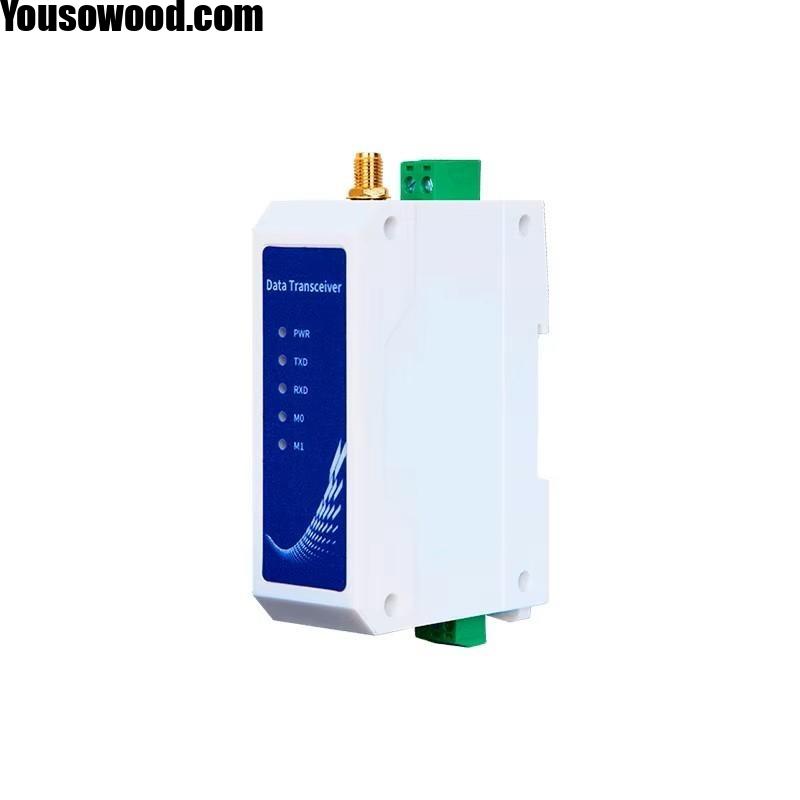
E95-DTU(900SL30-485)): Equipped with a LoRa spread spectrum chip, covering the 850.125 MHz and 930.125 MHz frequency bands, with a transmit power of 22dBm and a maximum communication distance of 5 kilometers. Utilizing an RS485 interface, it supports repeater networking, RSSI, and LBT functions, making it the preferred solution for long-distance wireless data transmission in industrial applications.
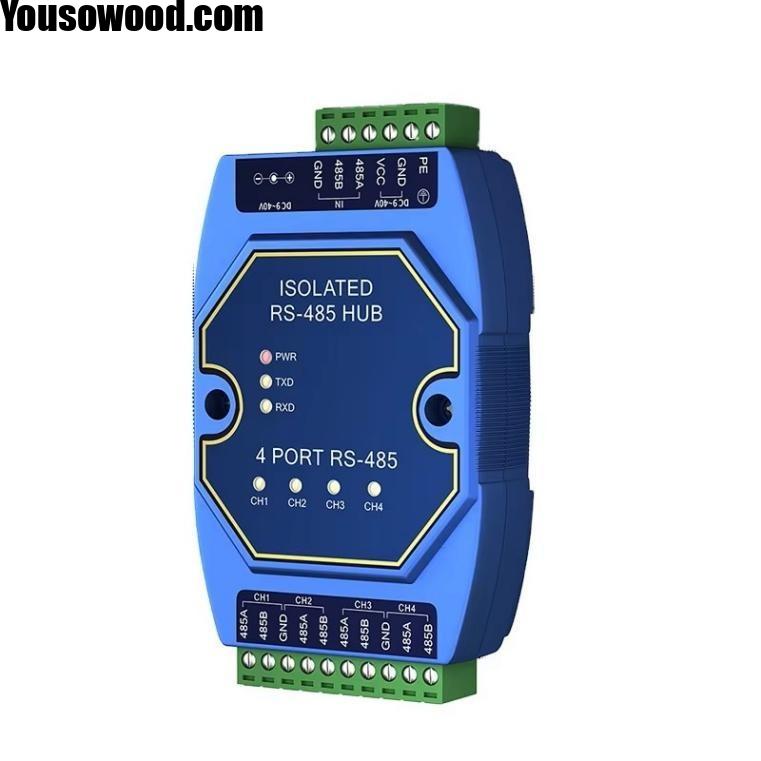
E810-R14: Adopting an industrial-grade isolation solution, it converts 1 RS485 input to 4 RS485 outputs, featuring opto-isolation and EMC protection. It supports multi-device expansion and signal relay, effectively resolving bus conflicts and node expansion issues, making it the preferred solution for stable RS485 bus communication in industrial fields.