
Not Every Link Needs to Be Cutting-Edge
There’s a tendency to think network upgrades should happen everywhere at once. New speeds come out, and suddenly it feels like everything should move in that direction. But when you actually look at how networks grow, it’s rarely that clean.
Some parts move fast. Others don’t.
And in those slower-moving parts, 40GBASE-LR4 tends to stick around longer than people expect.
Defined under the IEEE 802.3 specification, 40GBASE-LR4 delivers 40Gbps over single-mode fiber up to around 10 kilometers. That puts it in a space that isn’t exactly new, but not completely outdated either.
It’s somewhere in between, and that’s kind of the point.
Because a lot of networks live in that “in between” stage for quite a while.
Where It Naturally Fits Without Much Debate
You’ll often find LR4 modules in places where bandwidth demand has grown, but not explosively.
Maybe a campus network where multiple buildings connect back to a central core. Maybe an enterprise environment where departments generate different levels of traffic. Or even a smaller data center where east-west traffic is increasing, but not enough to justify jumping straight to 100G.
In these situations, 10G starts to feel limited.
But 100G can feel like too much—too expensive, too disruptive, maybe even unnecessary.
40GBASE-LR4 ends up being the middle ground.
It doesn’t require a full redesign of the network, and it doesn’t introduce a completely new way of operating. It just increases capacity where it’s needed.
And sometimes, that’s all you’re really trying to do.
What’s Actually Happening Inside the Module
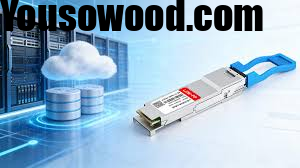
From the outside, LR4 modules look simple. You plug them into a QSFP+ port, connect duplex single-mode fiber, and the link comes up.
Inside, though, it’s doing something a bit more involved.
Instead of sending a single 40G signal, the module splits the data into four 10G lanes. Each lane is transmitted using a different wavelength, and then all four are combined onto the same fiber.
At the receiving end, those wavelengths are separated again and reconstructed into a single 40G stream.
It’s not the most modern approach anymore, but it’s a proven one.
And more importantly, it’s predictable.
Deployment That Doesn’t Feel Like a Big Project
One of the reasons 40GBASE-LR4 keeps showing up is that it doesn’t feel like a major upgrade when you deploy it.
You’re not introducing a new architecture. You’re not dealing with unfamiliar interfaces. Just increasing the capacity of an existing link.
In many cases, the fiber is already there. The switches already support QSFP+ ports. The physical setup doesn’t need to change much.
So the upgrade becomes more of a swap than a rebuild.
That makes it easier to roll out in phases.
You upgrade the links that need it first, leave the rest as they are, and gradually move forward over time.
There’s no pressure to do everything at once.
What Day-to-Day Operation Feels Like
After installation, LR4 links tend to settle into a very predictable pattern.
They stay up.
Monitoring systems will show optical power levels for each of the four lanes, along with temperature and other basic diagnostics. Most of the time, those numbers don’t change much.
If something does go wrong, it’s usually something physical—dirty connectors, fiber issues, patching mistakes.
The multi-lane design does add a small layer of visibility. If one lane starts behaving differently from the others, it can hint at a developing issue. But in practice, these cases aren’t very common.
For most operators, LR4 links become part of the background.
You don’t think about them unless there’s a reason to.
Why It Doesn’t Disappear Overnight
Even though 100G and higher speeds are becoming more common, 40GBASE-LR4 doesn’t just vanish.
Part of that is timing.
Network upgrades are tied to budgets, hardware lifecycles, and actual demand. Even if a faster option exists, it doesn’t mean every link gets upgraded immediately.
Another part is practicality.
If a 40G link is handling its traffic without congestion, replacing it doesn’t always bring a clear benefit. And without that benefit, the upgrade gets delayed.
Over time, some links move to higher speeds. Others stay where they are.
And that mixed environment becomes the new normal.
How It Lives Alongside Newer Technologies
In many networks, you’ll see 40GBASE-LR4 operating alongside 25G, 100G, and even older 10G links.
Each serves a different role.
Core layers might use higher speeds to handle large volumes of traffic. Aggregation layers might balance between cost and performance. Edge layers might still rely on lower speeds.
LR4 fits into that structure without causing friction.
It doesn’t require special handling or complex integration. It just works as part of the overall system.
That kind of compatibility makes it easier to manage networks that evolve over time rather than all at once.
Conclusion
40GBASE-LR4 continues to play a practical role in networks that are growing gradually rather than undergoing immediate transformation. By offering a clear step up from 10G while avoiding the complexity of higher-speed solutions, it provides a balanced option for medium-distance connections over single-mode fiber. Its familiar deployment model, stable operation, and compatibility with existing infrastructure allow it to remain useful even as newer technologies take over more demanding parts of the network. In many real-world scenarios, that steady, in-between position is exactly where it needs to be.
Disclaimer
This article is intended for informational and educational purposes only. The technical details provided about 40GBASE-LR4 are based on general industry standards, including IEEE 802.3 specifications, and may vary depending on specific hardware vendors and network configurations. Readers are advised to consult official documentation and certified network professionals before making implementation decisions.