
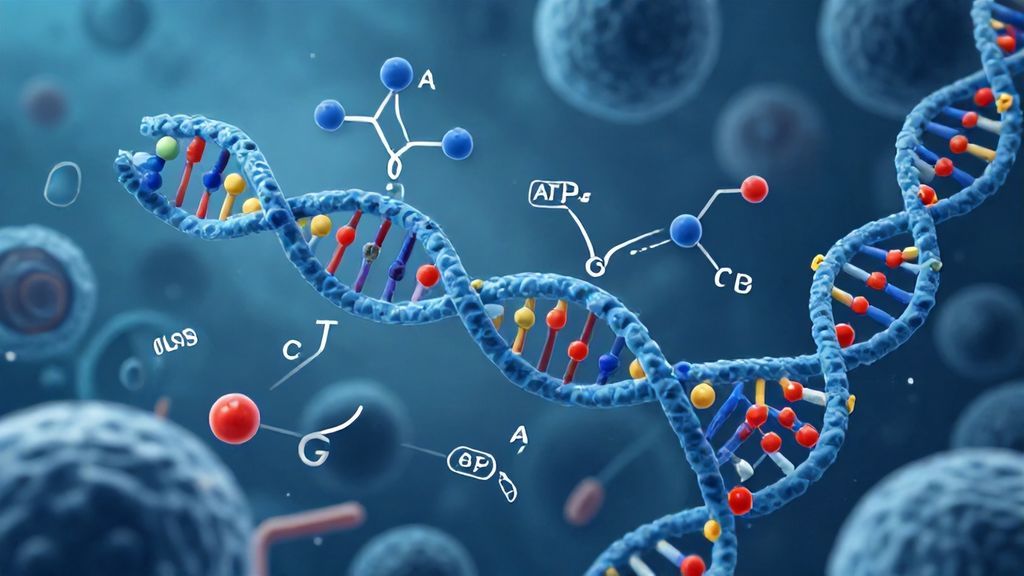
Nukleotidy are among the most essential molecules in all living organisms, yet their microscopic size belies their incredible importance. These small organic compounds serve as the foundational units of nucleic acids—DNA and RNA—which store and transmit genetic information, regulate cellular function, and fuel the biochemical processes that sustain life. Without it, cells could neither replicate nor produce the proteins and enzymes that enable complex biological activity. From the energy molecules that power our muscles to the genetic instructions that determine our traits, they are indispensable at every level of life.
History of Nukleotidy Discovery
The journey of understanding it began in the late 19th century when Swiss physician Friedrich Miescher first isolated nucleic acids from the nuclei of white blood cells. Although he did not fully understand their function, Miescher recognized these molecules as a novel substance distinct from proteins. Subsequent research in the early 20th century identified the chemical components of nucleic acids, including nitrogenous bases, sugar molecules, and phosphate groups, revealing the structure of what we now call nukleotidy.
The discovery of DNA’s double-helix structure by James Watson and Francis Crick in 1953 marked a milestone in molecular biology. This discovery provided critical insight into how sequences of nucleotides store genetic instructions and replicate accurately. Over time, scientists expanded their understanding of RNA and its various functions in protein synthesis, cellular signaling, and regulatory mechanisms. The term is widely used in international scientific and educational contexts, while “nucleotides” remains the standard in English-language scientific literature. Regardless of terminology, their fundamental importance in life is universally recognized.
Structure of a Nukleotidy
At the molecular level, a nucleotide is composed of three essential components: a nitrogenous base, a pentose sugar, and one or more phosphate groups. Each of these components plays a critical role in the molecule’s function and interactions.
Nitrogenous Bases
Nitrogenous bases are the most variable part of a nucleotide and encode the genetic information that determines the synthesis of proteins. There are four primary bases in DNA: adenine (A), thymine (T), cytosine (C), and guanine (G). In RNA, uracil (U) replaces thymine. These bases pair specifically through hydrogen bonds: adenine pairs with thymine (or uracil in RNA), and cytosine pairs with guanine. These pairing rules are essential for maintaining the integrity of genetic information and ensuring accurate replication during cell division.
Nitrogenous bases are categorized into two groups: purines (adenine and guanine) and pyrimidines (cytosine, thymine, and uracil). The distinction lies in their molecular structure: purines have a double-ringed structure, while pyrimidines are single-ringed. This structural difference affects how they fit together in the DNA double helix and RNA strands.
Sugar Molecules in Nukleotidy
The sugar component of a nucleotide is a five-carbon pentose, which connects the nitrogenous base and phosphate group. In DNA, the sugar is deoxyribose, which lacks an oxygen atom at the 2’ carbon position. This small structural difference makes DNA more chemically stable, suitable for long-term storage of genetic information. In RNA, the sugar is ribose, which contains a hydroxyl group at the 2’ position, making RNA more reactive and flexible for functions like transcription and translation.
Phosphate Groups
Phosphate groups are critical for linking nucleotides into long chains. They form phosphodiester bonds between the 3’ hydroxyl group of one sugar and the 5’ phosphate of the next nucleotide. This connection creates the sugar-phosphate backbone of DNA and RNA, providing structural stability and a framework for the nitrogenous bases. Beyond structural roles, phosphate groups are central to energy metabolism, forming molecules like ATP (adenosine triphosphate), which store and release energy for cellular activities.
DNA vs. RNA Nucleotides
Although both DNA and RNA are composed of nukleotidy, there are significant differences that determine their function:
| Feature | DNA | RNA |
| Sugar | Deoxyribose | Ribose |
| Nitrogen Bases | A, T, C, G | A, U, C, G |
| Structure | Double-stranded helix | Single-stranded |
| Function | Long-term genetic storage | Protein synthesis and regulation |
| Stability | Chemically stable | More reactive, less stable |
DNA’s double-stranded helix ensures stable long-term storage of genetic information. RNA, usually single-stranded, is versatile and participates in gene expression, regulation, and enzymatic activity. Understanding these differences is fundamental to genetics, molecular biology, and biotechnology.
Biological Functions of Nukleotidy
They are far more than the structural units of DNA and RNA. They perform diverse roles that are critical to life.
Genetic Information Storage
The sequence of nitrogenous bases in DNA nucleotides encodes the instructions for building proteins, regulating cell function, and maintaining organismal integrity. Each triplet of bases, called a codon, corresponds to a specific amino acid during protein synthesis. Accurate replication of these sequences during cell division ensures the faithful transmission of genetic information from one generation to the next.
Energy Transfer
Nukleotidy like ATP, GTP, UTP, and CTP act as energy carriers in the cell. ATP, for example, stores chemical energy in its high-energy phosphate bonds, which is released during hydrolysis to power cellular processes, including muscle contraction, nerve signal transmission, and biosynthesis of macromolecules. The dual role of nucleotides—as both informational and energetic molecules—underscores their multifunctionality.
Signaling Molecules
Certain nucleotides, such as cyclic AMP (cAMP) and cyclic GMP (cGMP), act as secondary messengers in cellular signaling. They regulate enzyme activity, control gene expression, and facilitate intercellular communication. These signaling molecules are essential for responses to hormones, growth factors, and environmental stimuli.
Metabolic Functions
Nukleotidy are integral to metabolic pathways. Coenzymes like NAD+, FAD, and Coenzyme A contain nucleotide structures and are vital for electron transfer in glycolysis, the citric acid cycle, and oxidative phosphorylation. They enable cells to efficiently extract energy from nutrients and maintain metabolic homeostasis.
Immune Support and Tissue Repair
Nucleotides are essential for immune cell proliferation, tissue regeneration, and recovery from injury. During infection or after surgery, higher nucleotide availability enhances cellular repair and promotes faster healing. This role highlights their importance in health and disease recovery.
Environmental and Physiological Factors Affecting Nukleotidy Functionality
Nukleotidy are sensitive to environmental conditions and physiological states:
- Temperature: Extreme heat or cold can denature DNA and RNA, impairing replication and transcription.
- pH Levels: Deviations can disrupt hydrogen bonding between bases, affecting stability.
- Ion Concentrations: Essential ions like Mg²⁺ stabilize nucleic acid structures; imbalance can compromise function.
- Oxidative Stress: Toxins and radiation cause nucleotide damage, leading to mutations and impaired cellular processes.
- Nutrient Availability: Deficiencies in folate, amino acids, or phosphate limit nucleotide synthesis, affecting DNA repair and cell division.
Understanding these factors is critical for cell biology, genetics, and therapeutic interventions.
Dietary Sources of Nukleotidy
Humans can obtain nucleotides from both food and internal synthesis. Certain diets and supplementation strategies can optimize nucleotide availability.
Animal-Based Sources
- Organ meats such as liver and kidney.
- Seafood, eggs, poultry, and dairy products.
- Rich in DNA and RNA, providing ready-made building blocks for repair and growth.
Plant-Based Sources
- Legumes (lentils, chickpeas, soybeans).
- Whole grains and mushrooms.
- Provide nucleotides in lower concentrations but valuable in balanced diets.
Supplements of Nukleotidy
- Used in medical nutrition, infant formulas, and recovery diets.
- Synthetic nucleotides mimic natural molecules.
- Beneficial for athletes, recovering patients, or individuals with immune deficiencies.
- Safety considerations: excessive intake may cause mild digestive issues; consult healthcare professionals when necessary.
Mutations and Genetic Implications
Alterations in nucleotide sequences—mutations—can have profound effects:
- Substitutions: Single-base changes can alter protein function.
- Insertions/Deletions: Shift coding sequences, potentially causing nonfunctional proteins.
- Rearrangements: Disrupt regulatory regions, affecting gene expression.
Studying nucleotide mutations is fundamental for understanding genetic disorders, cancer, and evolutionary biology.
Practical Applications in Biotechnology and Medicine
Nukleotidy are pivotal tools in modern science:
- Molecular Techniques: PCR, DNA sequencing, CRISPR.
- Medical Therapies: Gene therapy, vaccine development, antiviral drugs.
- Diagnostics: Detection of genetic diseases, pathogens, and forensic applications.
- Synthetic Biology: Designing organisms, biofuels, and therapeutic molecules.
The ability to engineer nucleotides has transformed biotechnology, agriculture, and medicine.
Future Potential of Nukleotidy Research
Research on nucleotides continues to expand:
- Modified Nucleotides: Enhanced stability and therapeutic potential.
- DNA-Based Data Storage: Tiny molecules storing massive amounts of digital information.
- Personalized Medicine: Genome mapping and tailored treatments.
- Cancer Vaccines and Regenerative Therapies: Nucleotide-based innovations for next-generation medicine.
Continued research promises breakthroughs in genetics, synthetic biology, and molecular medicine.
Comparison – DNA vs. RNA Nucleotides
| Feature | DNA | RNA |
| Sugar | Deoxyribose | Ribose |
| Nitrogen Bases | A, T, C, G | A, U, C, G |
| Structure | Double-stranded | Single-stranded |
| Function | Genetic storage | Protein synthesis & regulation |
| Stability | High | Moderate/Reactive |
Conclusion
Nukleotidy are far more than structural units of DNA and RNA—they are multifunctional molecules essential for life. They govern genetic information storage, energy transfer, metabolic regulation, immune function, and cellular signaling. From dietary sources to synthetic supplements, from molecular research to biotechnology, their impact spans nutrition, health, and cutting-edge science.
Understanding equips us with insights into molecular biology, disease mechanisms, and therapeutic innovations. As research continues, these tiny molecules will remain at the forefront of discoveries that shape medicine, biotechnology, and our comprehension of life itself. By studying and respecting nukleotidy, we gain a deeper appreciation for the intricate machinery that sustains all living organisms.
Disclaimer:
The information provided in this article is intended for educational and informational purposes only. While every effort has been made to ensure accuracy, the content should not be considered medical, nutritional, or professional advice. Readers should consult qualified healthcare professionals or scientific sources for guidance on medical conditions, dietary supplements, or research applications. The author and publisher are not responsible for any actions taken based on the information provided in this article.