
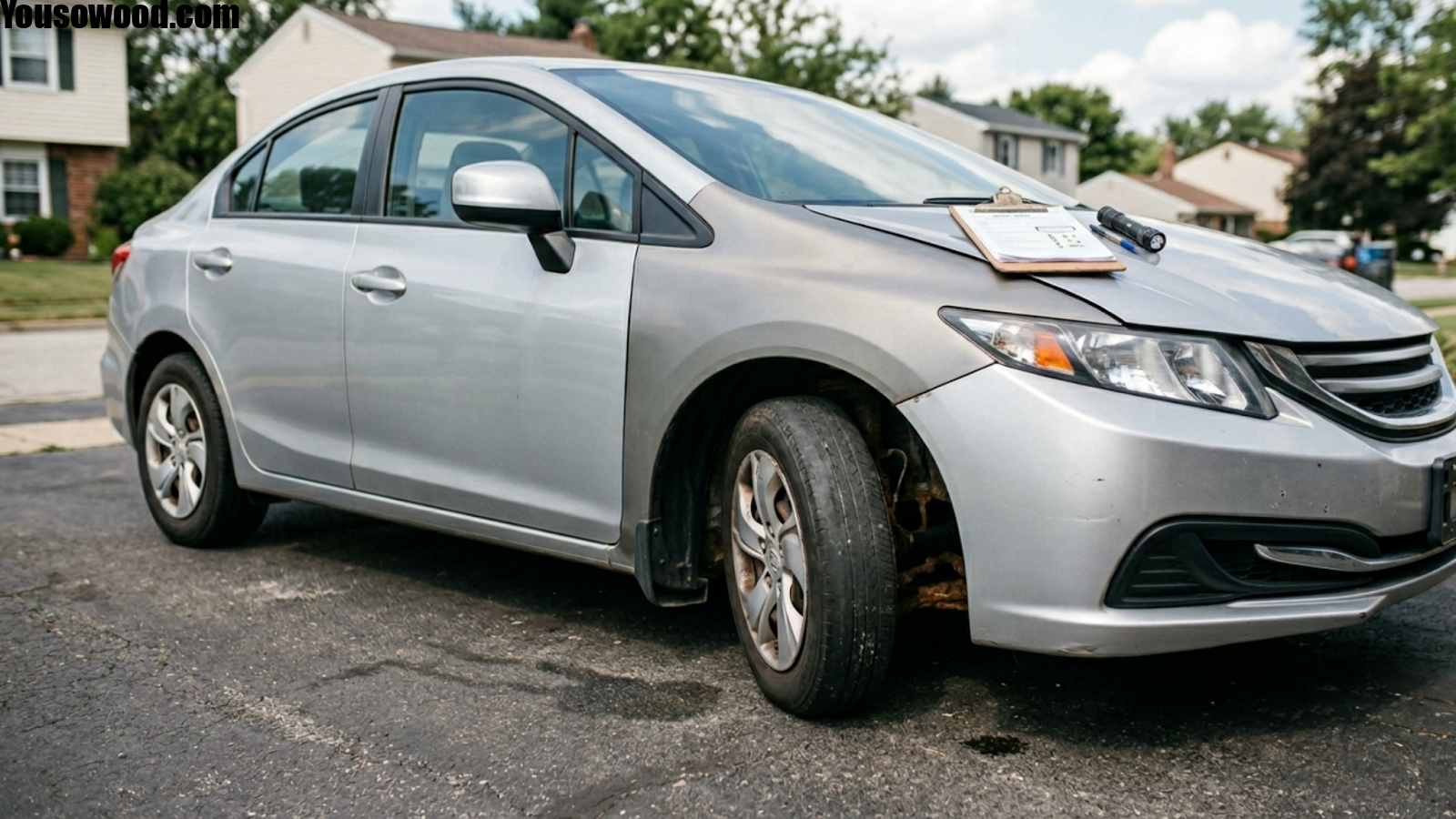
A buyer buys a used car. He checks it over in a parking lot, drives it for ten minutes, hands over $6,200 cash because it seems fine and the seller seems like a normal person. Three weeks later the transmission starts slipping. Two months after that they found out the car had been in a flood in Louisiana and made its way up to Pennsylvania through a couple of middlemen. The title said nothing. The seller said nothing. The car looked fine.
That’s an expensive way to learn how this works.
What most first-time buyers don’t realize is that a car’s history leaves marks in very specific places. There are actual records. A whole system of documentation follows a car from the factory to you, and a lot of it is accessible if you know where to look. The problem is nobody explains this stuff before you need it. Usually you learn it the same way everyone else did. Something breaks and a mechanic explains what you should have looked for before you bought it.
What follows is that conversation, just earlier.
The VIN Is Where You Start, Every Single Time
The number at the base of the windshield on the driver’s side is the first thing worth caring about. Get it written down before anything else happens. Before you ask about the price, before you ask to drive it, write down that number.
That number connects to records. Real ones. Not just what the seller tells you but what insurance companies filed, what state motor vehicle departments recorded, what auction houses logged, what dealers entered when the car came in for service. It’s not a complete picture of everything the car ever did, but it’s a lot more than the listing tells you.
Carfax and AutoCheck are the two main services that compile all of this. You can run a report on either one for around $40 to $50, less if you find a promo code, which is usually just a quick search away. The report comes back with a timeline. Every recorded event in the car’s life that made it into one of the databases they pull from.
Here’s what the report won’t tell you, and this matters: anything that wasn’t officially reported. Someone backs into a pole, doesn’t want to file a claim, pays the body shop in cash, done. That never appears anywhere. The report is honest about what got recorded. It just doesn’t know what didn’t. Which is exactly why the VIN report is the beginning of your research, not the end.
What You’re Actually Looking For in That Report
People pull the report and then stare at it without really knowing what matters. So let’s go through it.
Number of previous owners is the first thing I check. Not because more owners is automatically bad, some fleet vehicles have had dozens of technical owners but were well-maintained, but because a lot of short ownership periods raises questions. If a car was owned by four people in three years, I want to know why each one sold it. That pattern sometimes means the car kept developing problems that kept getting passed along.
Title history is the big one. The words you don’t want to see: salvage, rebuilt, reconstructed, flood, lemon law buyback. Each of these is a brand on the title that follows the car forever.
Salvage means an insurance company once decided the car cost more to fix than it was worth. They paid the claim and took the car. Somewhere between 70 and 90 percent of the car’s value in damage, depending on the state, is usually what triggers it. Some of these cars get fixed and put back on the road. Some get fixed well.
Rebuilt means it was salvaged first, then someone repaired it and had the state sign off on it. Which they did. What the state signed off on is that the car met the minimum standard to be back on the road, not that whoever fixed it did a thorough job of it. Just that the car met minimum standards.
Flood titles are the ones that keep mechanics up at night. Water damage hides. Electrical systems are the main problem. Corrosion builds slowly inside connectors and modules and wiring harnesses. A flood car can run without issues for months and then start developing random electrical failures that are genuinely difficult to diagnose. I’d be very cautious with any flood title car regardless of how it looks or drives.
Lemon law buybacks happen when a manufacturer repurchases a vehicle because a defect couldn’t be resolved after multiple attempts. Some states put this on the title. Others don’t. If it shows up on the VIN report, the manufacturer literally gave up trying to fix it.
Then look at the odometer readings across every logged entry in chronological order. They should climb. If they ever drop, or if there’s a gap of years with no entries and then a reading that seems oddly low, that’s worth questioning directly.
The Odometer on the Dash and Whether to Trust It
This is something first-time buyers often don’t think to question. The number on the dash feels official somehow, like it must be right. It isn’t always.
Digital odometers made it harder but not impossible. Swap the whole instrument cluster with one from a lower-mileage car at a salvage yard, or use programming tools that are openly sold online to write a new number to the module. People who want to do this know exactly where to get what they need.
The VIN report helps here because it shows odometer readings from different points in time. If the car shows 72,000 miles on the dash today but the report shows a dealer recorded 81,000 miles eighteen months ago, something doesn’t add up. That’s the conversation to have with the seller.
The interior also tells you things. A car with genuinely low miles has an interior that looks like it. The driver’s seat bolster, the raised outer edge your thigh presses against every time you get in, stays relatively firm. The carpet near the pedals has texture to it. The steering wheel leather or grip material hasn’t worn smooth. These things accumulate over thousands of uses and they’re genuinely hard to fake or restore convincingly. If the dash says 55,000 miles but the pedal rubber is worn through, believe the pedals.
Accident History Is Deeper Than One Report
The VIN report shows accidents that were reported to insurance. That’s it.
Plenty of accidents never make it in. Minor hits, private cash settlements, anything where both parties decided not to involve insurance. These leave no record anywhere except on the car itself, if you know where to look.
Panel gaps are one thing to check. Hood up, look at how the bumper cover sits against the headlights and fenders on each side. Look at the gaps between the hood and the fenders. Factory assembly produces consistent spacing. A repair job almost always introduces small variations, sometimes a millimeter or two, sometimes more. It’s subtle but consistent gaps is the standard and variation from it is a sign something was worked on.
Paint is another one. In direct sunlight, get low and walk slowly along the side and have a look at the panel from a low angle. Factory paint and repainted paint don’t age the same way and in the right light that difference shows up, in the texture, in the color, sometimes just in a feeling that one panel doesn’t quite belong with the rest. If one door or one quarter panel looks even fractionally different from what’s next to it, it probably was repainted at some point.
The firewall, which is the vertical metal panel at the back of the engine bay separating the engine from the cabin, sometimes shows damage from front-end impacts that the exterior body panels don’t. Stress creases, small bends, paint that’s cracked along a fold line. These don’t always get repaired because they’re not visible. A front-end hit hard enough to crease the firewall was a significant collision regardless of how clean the repaired bumper and hood look now.
Service Records: What They Are and Why Gaps Matter
A car that’s been taken care of usually has some evidence of it. Not always a thick folder of receipts, but something. Oil change stickers on the door jamb or the windshield, dealer service printouts in the glovebox, handwritten notes from an independent shop.
When a seller has nothing, that’s worth pushing on gently. Ask where the car was usually serviced. If they give you a name, call that shop before you make any decisions and ask if they have records for that VIN. Dealers almost always do and they’ll usually tell you what was done and when. Independent shops vary but it’s worth trying.
What you’re trying to work out is whether someone actually looked after this car or just drove it. Oil changes are the basic one, every 5,000 to 7,500 miles roughly. But timing belts are the thing worth asking about specifically because most buyers don’t and the consequences of missing one are not small.
On engines that use a rubber timing belt, it needs replacing somewhere between 60,000 and 105,000 miles depending on the car. On an interference engine, which covers a lot of common makes, a snapped belt means the pistons and valves meet each other inside the engine. That’s not a repair. That’s a different car.
If you’re looking at a car with 95,000 miles and no record of a timing belt replacement on an engine that calls for it by 90,000, you’re either about to pay for that service or you’re driving on borrowed time.
Check the fluids in person while you have the hood up. Pull the transmission dipstick if the car has one. Should be reddish. Smell it. A burnt smell before you even look at the color is enough to tell you the transmission has been running without proper service for longer than it should have, and that’s not a cheap conversation to have with a mechanic. Coolant should be one of several bright colors, green, orange, pink, depending on the type the car takes. Murky brown coolant means the system hasn’t been flushed in a long time and may have internal corrosion developing.
The Computer Check Most Buyers Skip Entirely
Most people don’t know this one. Every modern car is running on a network of computers and those computers keep notes. Something goes wrong for a second and then sorts itself out, the light never even comes on, but the code is sitting in there. Clear the light and the code usually stays.
A basic OBD-II scanner costs under $30 and plugs into a port under the dash, almost always below the steering column on the driver’s side. Any auto parts store will also lend you one for free. Plug it in with the car running and it reads whatever the computer has stored, active codes, pending codes, recently cleared codes.
Some sellers clear the codes right before a showing so the check engine light stays dark. The scanner shows you something called readiness monitors, which are the system’s self-checks that run during normal driving. If several of them show as “not ready” or “incomplete” on a car that supposedly runs fine and gets driven regularly, the computer was recently reset. It hasn’t had enough drive time since the reset to complete its checks. That’s a flag.
Airbag modules are a separate thing. When airbags actually deploy in a crash, the event gets recorded in the airbag control module. Shops sometimes reset these correctly as part of a repair. Sometimes they don’t do it right. A scanner that can read airbag codes can tell you whether deployment was recorded, which tells you something about how severe any accident was regardless of what the bodywork looks like now.
What a Pre-Purchase Inspection Actually Gets You
I’ll be direct about this: get one. Always.
You take it to your own mechanic, not one the seller suggested, and you pay them to spend an hour with it. Costs about what a decent dinner out costs two people.
The mechanic sees things a regular buyer walking around a car can’t. Frame alignment. Evidence of body repairs that weren’t in the VIN report. Engine compression across each cylinder, which tells you about internal wear. Leaks that are too small to drip on the ground but visible once you’re under the car with the right lighting. Suspension components that are close to failing. Brakes that need to be replaced before winter.
If the seller tells you an inspection isn’t necessary, or that they’d rather you use a shop they know, or that they’ve already had it inspected and here’s the report, be polite and do it yourself anyway at a shop of your choosing. Their mechanic has a different customer than you do.
One thing worth knowing: even a clean inspection doesn’t mean the car is perfect. It means it passed that mechanic’s eye on that day. But a clean inspection from someone who was paid to be honest with you is worth a lot more than a seller’s assurance that the car is great.
Putting It Together Before You Commit
Run the VIN report first. It’s the cheapest information you can get and it tells you immediately if there’s a title brand, a mileage discrepancy, or a pattern of ownership worth asking about. If the report raises serious questions, that’s the end of the conversation. Move on.
If the report is clean or close to it, book the pre-purchase inspection. Not after you decide to buy. Before. The inspection is part of your decision, not a formality after it.
Do the test drive yourself, on real roads, long enough for everything to fully warm up. At least fifteen to twenty minutes. Highway driving, not just neighborhood streets. AC on full. Radio off at some point so you can listen.
See it in daylight. Not a garage, not evening, actual afternoon sun. Repaints and mismatched gaps and small dents in awkward spots all but disappear in bad light and show up clearly when they don’t have anywhere to hide.
The whole thing, VIN report, inspection, proper test drive, takes a day and costs under $250. On a purchase worth several thousand dollars that’s not much to spend on knowing what you’re actually getting. The people who skipped it and wished they hadn’t outnumbered the ones who did it and felt it was unnecessary by a lot.
First time buyers get taken advantage of not because they’re careless but because everything is happening at once and some sellers know how to use that. The paperwork, the price negotiation, the pressure of someone else apparently coming to look at it tomorrow. Slowing down and going through the car properly is the one thing that evens that out a little.