
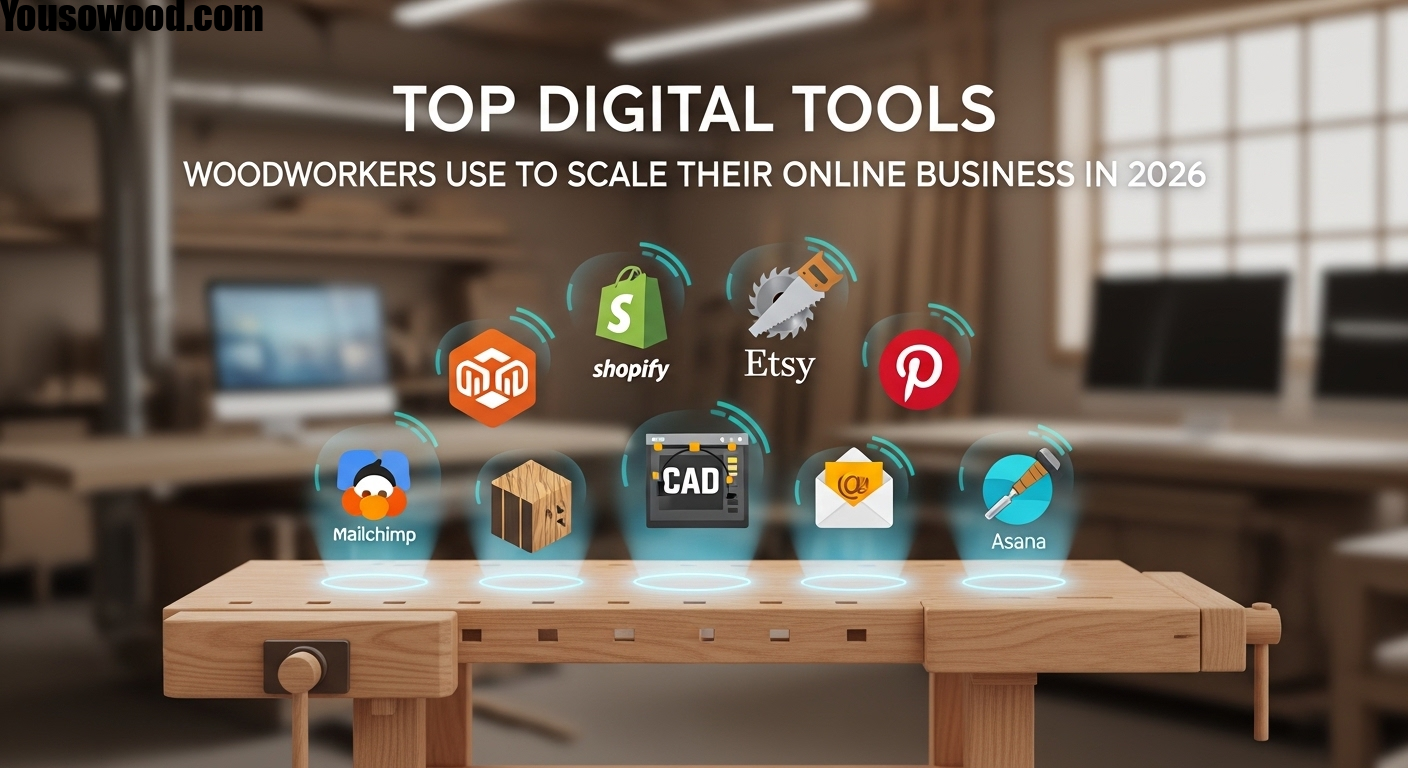
The woodworking industry is changing rapidly. In 2026, success isn’t just about skill with a saw or chisel — it also involves using digital tools to manage your workflow, reach more customers, and grow your business. Whether you create handcrafted furniture, live edge tables, or DIY kits, knowing which tools to use can make your work more efficient and help you expand online.
This guide explains the top digital tools woodworkers use in 2026, why they are important, and how they help scale a woodworking business.
1. E-Commerce Platforms: Making Your Work Accessible Online
Selling woodworking products online has become essential. Platforms like Shopify, Etsy, and BigCommerce allow woodworkers to create online stores where customers can browse and buy their products easily.
Key Benefits:
- Display products with high-quality photos and videos
- Manage inventory efficiently
- Accept multiple payment options
- Reach a global audience
Informational Insight: Even a small woodworking business can expand internationally with an online store, reaching customers beyond local markets.
2. Design & Prototyping Software: Plan Before You Build
Modern woodworkers often design projects digitally before creating them physically. Tools like Fusion 360, SketchUp, and AutoCAD allow you to:
- Visualize projects in 3D
- Experiment with materials, dimensions, and colors
- Share designs with clients or collaborators
Informational Insight: Digital design reduces mistakes, saves materials, and improves efficiency in production.
3. Social Media Scheduling Tools: Sharing Your Craft Consistently

Platforms such as Instagram, TikTok, and Pinterest are popular for woodworking content. Scheduling tools like Buffer, Later, or Hootsuite help you post consistently and reach your audience effectively.
Key Advantages:
- Plan content ahead of time
- Analyze engagement metrics
- Post at the most effective times for your audience
Informational Insight: Consistent posting helps build a loyal following and increases visibility, which is crucial for growing your business organically.
4. Email Marketing Platforms: Keep Your Audience Informed
Email marketing remains a powerful way to communicate with customers. Tools like Mailchimp, Klaviyo, and ConvertKit allow woodworkers to:
- Share updates, promotions, or new product launches
- Send personalized messages to specific customer groups
- Automate follow-ups for abandoned carts
Informational Insight: Emails that include helpful woodworking tips or behind-the-scenes content can engage readers and build trust.
Pro Tip: Just like regular air conditioning maintenance keeps HVAC systems efficient, maintaining consistent communication with your audience ensures your online business runs smoothly.
5. Customer Relationship Management (CRM) Tools: Organize Orders and Clients
CRM software like HubSpot, Zoho CRM, and Pipedrive helps woodworkers manage multiple custom orders and client communications.
Benefits:
- Track orders and messages
- Automate reminders and follow-ups
- Keep client information organized
Informational Insight: Using a CRM ensures you can handle growth smoothly while maintaining excellent customer service.
6. Analytics & SEO Tools: Understand Your Audience
Tools like Ahrefs, SEMrush, and Google Analytics help woodworkers understand:
- Which keywords bring traffic to their site
- How competitors are performing
- Customer behavior patterns
Informational Insight: Focusing on long-tail keywords, like “handcrafted oak live edge table”, can attract buyers who are ready to purchase and improve search engine visibility.
Pro Tip: Similar to how attic insulation advice hvac efficiency houston helps homeowners optimize HVAC performance, using analytics lets woodworkers optimize their online presence for better results.
7. Video & Media Tools: Showcase Your Work
Videos are powerful for explaining processes and showing finished products. Tools like Adobe Premiere Pro, Final Cut Pro, and Canva help woodworkers:
- Edit videos professionally
- Add captions or graphics
- Create tutorials or promotional content
Informational Insight: Video content increases engagement and helps customers see the quality and craftsmanship of your work.
8. Inventory & Production Management Tools: Stay Organized
Scaling a woodworking business requires careful tracking of materials and orders. Tools like Craftybase and Katana help:
- Manage inventory efficiently
- Track production schedules
- Calculate material costs
Informational Insight: Organized production ensures timely delivery and helps maintain consistent quality.
9. Payment & Financial Tools: Manage Transactions Easily
Smooth payment processes improve customer experience. Tools like Stripe, PayPal, and QuickBooks assist woodworkers in:
- Accepting multiple payment types
- Automating bookkeeping
- Monitoring expenses and profits
Informational Insight: Offering digital payment options increases convenience and can encourage repeat business.
10. Learning & Community Platforms: Stay Informed
Continuous learning is important for growth. Platforms like Skillshare, Udemy, and YouTube, along with online communities, provide:
- Tutorials for new techniques
- Insights into design and material trends
- Networking opportunities with other professionals
Informational Insight: Engaging in communities and learning from others keeps your skills current and your business competitive.
Conclusion
In 2026, scaling a woodworking business isn’t just about crafting products—it’s about using the right digital tools. From e-commerce platforms and social media to analytics and CRMs, these tools provide efficiency, visibility, and growth opportunities. By understanding how each tool works and applying them strategically, woodworkers can expand their reach, improve operations, and create a thriving online business.
FAQs
Q1: Which tool should I start with as a beginner?
A1: Start with an e-commerce platform, social media scheduling, and basic analytics to establish your online presence.
Q2: Are free tools enough for small woodworking businesses?
A2: Yes, free versions of Canva, Buffer, or SketchUp can be sufficient initially, though paid versions offer advanced features.
Q3: How can video content benefit my woodworking business?
A3: Video showcases your process and products, builds trust with customers, and increases engagement on social media and websites.
Q4: Do I need a CRM for a small woodworking shop?
A4: It depends on order volume. For custom or wholesale orders, a CRM can simplify communication and prevent mistakes.
Q5: How do SEO tools help attract buyers?
A5: SEO tools identify keywords that your potential customers search for, helping your website rank higher and reach the right audience.