
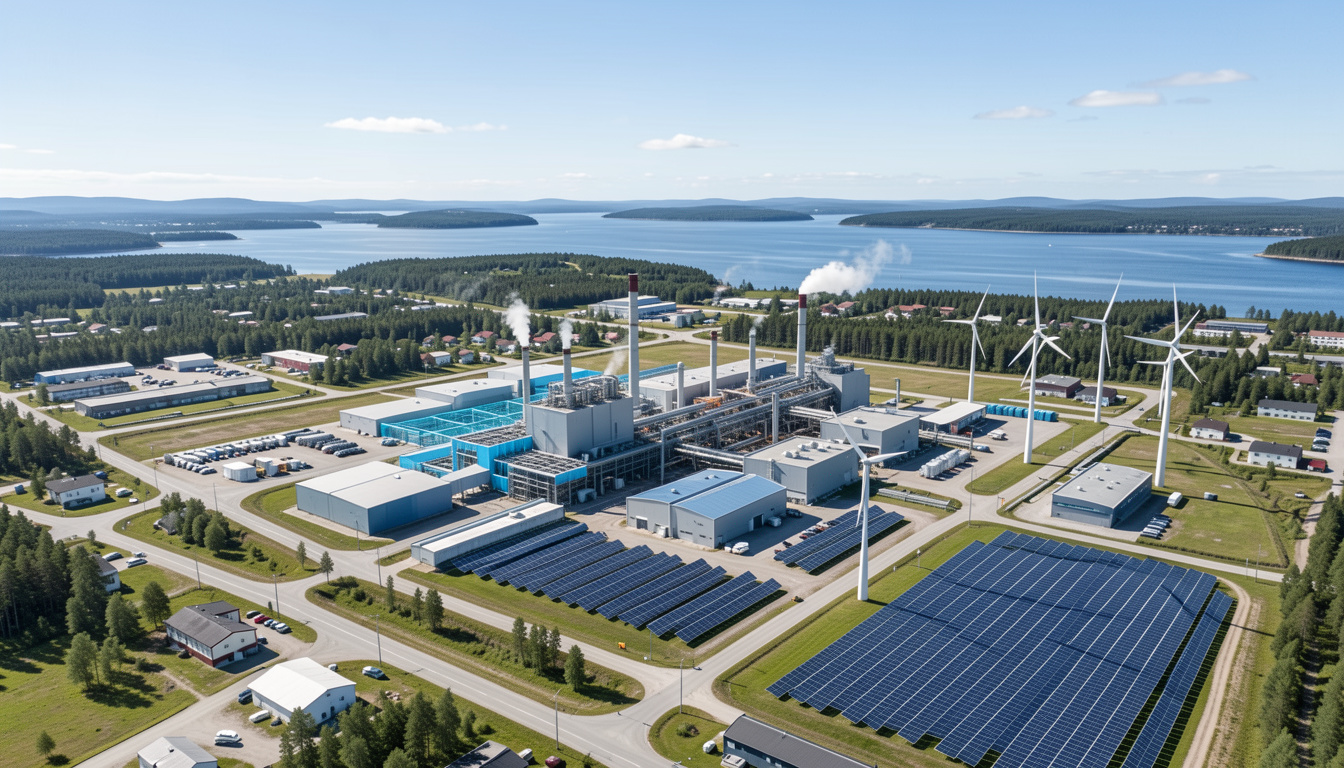
Bodenxt is not merely a local development project; it is a comprehensive blueprint for the future of sustainable communities. It addresses critical needs in the renewable industry, infrastructure modernization, and social welfare, ensuring that growth is balanced, inclusive, and environmentally responsible. As Sweden intensifies its commitment to carbon neutrality and green economic growth, initiatives like it play a pivotal role in shaping a sustainable future.
This article explores the vision, structure, and impact of Bodenxt, highlighting its green industrial initiatives, infrastructural developments, social contributions, and global significance.
The Vision and Goals of Bodenxt
At the heart of it is the vision of a “smart, green, and sustainable transformation for future generations.” This reflects the initiative’s ambition to accelerate more than two decades of development into a focused, strategic program. By doing so, it aims to serve as a model for future cities and green industrial hubs, demonstrating that environmental sustainability and economic growth can coexist harmoniously.
The long-term goals of Bodenxt focus on three core areas:
- Economic Growth: Stimulating investment, creating jobs, and fostering a diverse industrial ecosystem.
- Environmental Sustainability: Reducing carbon emissions, promoting renewable energy, and integrating eco-friendly practices across industries.
- Social Well-being: Enhancing quality of life through urban planning, housing, healthcare, and education.
According to an official statement from the Municipality of Boden: “Bodenxt represents our commitment to combining technological innovation with sustainable urban living. We aim to create a resilient community that thrives economically while preserving the environment for future generations.”
Strategic Structure and Core Projects
Bodenxt is structured around five interrelated strategic pillars, each addressing a critical component of development and sustainability. These pillars work together to create a cohesive and forward-looking framework for the municipality’s transformation.
Skills Supply of Bodenxt
A skilled workforce is essential for its success. The initiative focuses on developing talent for green industries, particularly in hydrogen technology, renewable energy, and smart infrastructure.
Key strategies include:
- Workforce development programs tailored to the demands of green tech and heavy industry.
- Collaboration with local universities and vocational schools to ensure educational alignment with industrial needs.
- Training programs are designed to upskill employees in modern technologies, preparing them for high-demand positions in emerging industries.
These efforts ensure that it not only attracts new industries but also nurtures a local talent pool capable of sustaining long-term growth.
Live & Stay
Urban planning under Bodenxt emphasizes creating livable, attractive communities. Residential expansion is coupled with investments in social infrastructure to attract and retain young professionals and families.
Initiatives include:
- Development of modern housing units with energy-efficient designs.
- Integration of community amenities such as schools, healthcare facilities, and recreational spaces.
- Urban strategies aimed at promoting social cohesion and a high quality of life.
Fostering a vibrant community, it ensures that industrial growth is complemented by resilient social development.
Business Development
Bodenxt encourages entrepreneurship and innovation by supporting startups, SMEs, and international investors.
Key initiatives include:
- Providing financial incentives and guidance for companies pursuing green innovation and sustainability projects.
- Establishing platforms for international collaboration and knowledge-sharing.
- Encouraging industries already present in Boden, such as renewable energy firms, to expand operations.
This strategic focus strengthens Bodenxt’s role as a hub for economic diversification and industrial modernization.
Above-Ground Infrastructure of Bodenxt
A robust infrastructural network underpins the industrial and social vision of Bodenxt. Projects include:
- Construction and modernization of roads, bridges, and railways to facilitate logistics and mobility.
- Integration of smart city technologies for energy efficiency, traffic management, and urban safety.
- Public transport enhancements that support sustainable commuting and reduce the region’s carbon footprint.
These improvements ensure that it can sustain both industrial activity and community growth.
Under-Ground Infrastructure of Bodenxt
It also prioritizes foundational infrastructure, ensuring the municipality is equipped for future industrial and residential expansion.
Initiatives include:
- Deployment of advanced energy grids, water supply systems, and utility networks.
- Installation of hydrogen pipelines and infrastructure for renewable energy storage.
- Planning for long-term scalability and resilience, ensuring that future expansions are efficient and sustainable.
This approach provides the backbone for its industrial and residential objectives, ensuring the region is prepared for decades of growth.
Bodenxt as a Hub for Green Industry
Its industrial strategy is centered on green technology and sustainable manufacturing, positioning Boden as a European and global leader in carbon-neutral industries.
Industrial Park of Bodenxt
The Boden Industrial Park serves as the epicenter of the initiative, housing industries that contribute to Sweden’s green transition.
Key features include:
- Development of a green steel plant utilizing hydrogen technology, significantly reducing carbon emissions compared to traditional methods.
- Establishment of a hydrogen production facility with large-scale capacity, providing clean energy for industry and community use.
- Support for eco-friendly manufacturing practices across multiple sectors.
This industrial hub positions Boden at the forefront of sustainable heavy industry.
Innovation and Technology Integration
Bodenxt integrates advanced technologies to optimize industrial efficiency and sustainability:
- Smart manufacturing and automation reduce waste and enhance productivity.
- Renewable energy use ensures industries operate with minimal environmental impact.
- Collaboration with research institutions and tech companies accelerates innovation and knowledge transfer.
Through this approach, Bodenxt creates a synergistic ecosystem where technology, research, and industry converge.
Global Significance
Its initiatives have international relevance, making the region a model for sustainable industrialization:
- Attracting foreign investment and skilled talent from across Europe and beyond.
- Demonstrating how carbon-neutral industrial hubs can be operationalized at scale.
- Offering a blueprint for other regions seeking to balance economic development with environmental responsibility.
By establishing a global reputation for innovation and sustainability, Bodenxt contributes to Sweden’s leadership in green industrial transformation.
Economic and Social Impacts of Bodenxt
It is poised to deliver substantial economic and social benefits to the region:
- Job creation: Approximately 5,000 new positions are projected in both industrial and service sectors.
- Housing development: The initiative plans for 3,000 new homes to accommodate population growth.
- Local economy boost: Expansion of local services and business opportunities.
- Social benefits: Improved educational facilities, healthcare access, and urban amenities enhance quality of life.
Projected Economic Impact by Sector:
| Sector | Expected Impact |
| Industry | 5,000 new jobs, green production growth |
| Housing | 3,000 new units for workers and families |
| Services | Increased local businesses and amenities |
| Education | Expansion of training programs and schools |
Environmental and Sustainability Goals of Bodenxt
Sustainability is central to Bodenxt’s mission, with strategic initiatives across emissions reduction, circular economy, and urban planning:
- Emission reduction strategies: Utilizing green steel production, hydrogen energy, and energy-efficient industrial processes.
- Circular economy initiatives: Recycling, resource optimization, and waste management programs embedded across industries.
- Urban sustainability: Eco-friendly housing, green public spaces, and sustainable transport options reduce the municipality’s environmental footprint.
Visual Aid Idea: An infographic showing projected carbon footprint reduction targets, highlighting Bodenxt’s commitment to environmental stewardship.
Challenges and Opportunities of Bodenxt
While it is a visionary initiative, transforming an entire municipality into a hub of green industry, sustainable urban development, and technological innovation is not without its challenges. Understanding these challenges is essential to appreciating the scope and ambition of the project, as well as the strategies being employed to ensure its success.
Large-Scale Funding Requirements
Bodenxt’s ambitious projects, from green steel production to hydrogen facilities and infrastructure modernization, require substantial investment. Securing continuous funding from government sources, private investors, and international partners is critical. Managing budgets while maintaining flexibility for technological innovation presents an ongoing challenge.
Workforce Recruitment and Training of Bodenxt
The success of it hinges on the availability of a skilled workforce. Recruiting experts in hydrogen technology, renewable energy, and industrial automation, while simultaneously training local talent, requires robust educational programs and partnerships with universities and vocational schools.
Long-Term Infrastructure Maintenance
Sustainable infrastructure must be designed for longevity. Roads, railways, utility grids, and hydrogen pipelines require continuous monitoring and maintenance, especially in northern Sweden’s harsh climate. Ensuring resilience while controlling operational costs is a key challenge.
Bodenxt in a Global Context
Its integrated approach to sustainable industrial and urban development can be compared to other international green initiatives, providing insight into its global significance.
For example, Germany has invested heavily in hydrogen production and storage projects, aiming to decarbonize energy-intensive industries. Similarly, Norway is developing green steel initiatives using renewable energy sources and hydrogen to minimize carbon emissions.
What sets Bodenxt apart is its comprehensive municipal strategy — combining green industrial projects with residential development, education, infrastructure, and social planning. Other regions can learn from it multi-dimensional planning, public-private collaboration, and phased implementation, which ensure both economic growth and environmental stewardship.
By positioning itself as a model for sustainable economic and urban development, it offers actionable lessons for municipalities worldwide seeking to integrate green industry, social well-being, and technological innovation into a single transformative platform.
Future Prospects
The future outlook for Bodenxt is both ambitious and transformative.
Timeline for Major Projects
Several key projects are scheduled over the next decade:
- Green steel plant: Expected to reach full production capacity within 3–5 years, serving as the foundation for a carbon-neutral industrial ecosystem.
- Hydrogen production facility: Gradually expanding to meet industrial and residential energy needs.
- Urban expansion: 3,000 new homes and community amenities will be developed over the next 5–7 years, accommodating population growth and workforce needs.
Long-Term Regional Impact of Bodenxt
It is expected to:
- Increase industrial output significantly, positioning Boden as a European leader in sustainable manufacturing.
- Support population growth, attracting skilled professionals and families to the region.
- Contribute to global sustainability goals, reducing carbon emissions, and promoting green industrial practices.
Technological Innovation Spillover
As Bodenxt develops hydrogen technology, green steel methods, and smart infrastructure solutions, these innovations are likely to spill over into other regions of Sweden and Europe, accelerating the adoption of sustainable industrial practices continent-wide.
Conclusion
It represents a multi-dimensional transformation platform, combining industrial innovation, urban development, workforce training, and environmental stewardship into a single cohesive initiative. By integrating green industry, sustainable infrastructure, and social development, it offers a blueprint for future-ready cities and industrial hubs.
The initiative’s significance extends beyond Boden or Sweden: it demonstrates how economic growth, environmental responsibility, and social well-being can be achieved simultaneously. Bodenxt provides lessons in planning, collaboration, and innovation that are applicable globally, inspiring municipalities and governments to adopt sustainable development strategies.
Ultimately, it is more than a project — it is a vision for the future of sustainable cities and industrial regions, a living example of how societies can balance economic prosperity with ecological responsibility and social progress. Its success could reshape the way communities worldwide approach green industrial development, making Boden a global model for sustainable transformation.