
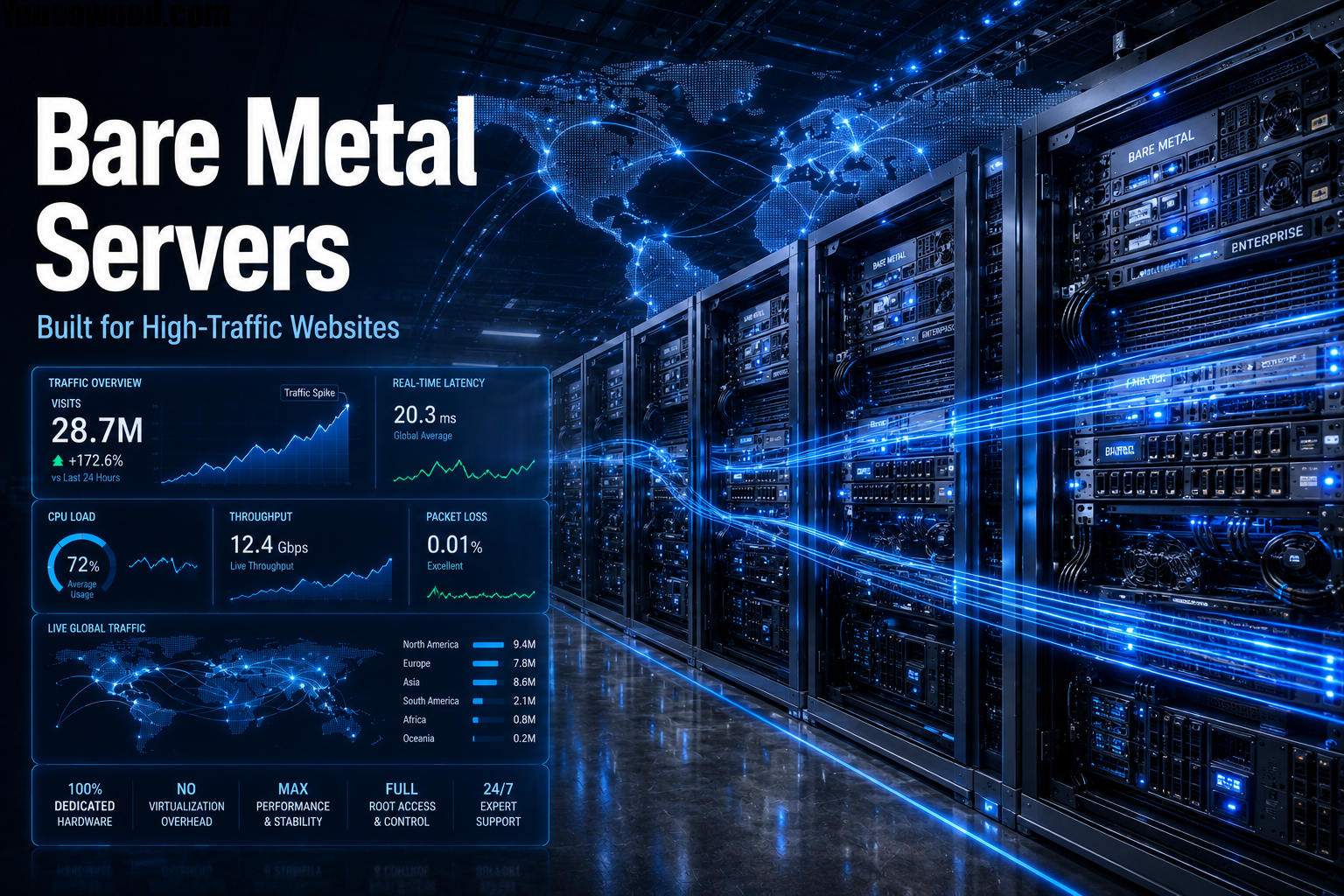
As websites continue to grow in size and complexity, the infrastructure behind them becomes more important than ever. Modern websites are expected to load quickly, remain available around the clock, and handle thousands—or even millions—of visitors without performance issues.
Whether it’s an e-commerce platform, a popular content website, a SaaS application, or an online marketplace, high-traffic websites require powerful and reliable infrastructure. This is why organizations need bare metal servers to support their most demanding workloads.
By providing direct access to dedicated physical hardware, bare metal servers offer the performance, stability, and control needed to keep modern websites running smoothly.
The Challenges of High-Traffic Websites
As traffic increases, websites place greater demands on hosting infrastructure.
High-traffic platforms often need to handle:
- Large numbers of simultaneous users
- Complex database queries
- Dynamic content delivery
- High volumes of transactions
- Continuous data processing
Without sufficient resources, websites may experience slow loading times, reduced responsiveness, or even downtime during peak traffic periods.
For businesses that depend on their online presence, these issues can directly impact customer satisfaction and revenue.
What Is a Bare Metal Server?
A bare metal server is a physical server dedicated entirely to a single customer.
Unlike shared hosting or virtualized environments, businesses receive exclusive access to all available hardware resources, including:
- CPU power
- Memory
- Storage
- Network bandwidth
Because resources are not shared with other users, applications can operate more efficiently and consistently.
This makes bare metal hosting especially attractive for websites that require maximum performance.
Why Dedicated Hardware Matters
One of the biggest advantages of bare metal hosting is exclusive resource access.
In shared environments, multiple customers compete for the same hardware resources. As demand increases, performance can become unpredictable.
With a bare metal server, businesses benefit from:
- Stable resource availability
- Faster processing speeds
- Better application responsiveness
- Reduced performance fluctuations
- Improved workload management
For high-traffic websites, this consistency is essential.
Faster Performance for Demanding Websites
Website speed has become a major factor in user experience.
Visitors expect pages to load quickly and applications to respond instantly. Even small delays can lead to:
- Higher bounce rates
- Reduced engagement
- Lower conversion rates
- Lost revenue opportunities
Bare metal servers help improve performance by providing direct access to hardware resources without the overhead often associated with shared environments.
This allows websites to maintain strong performance even during periods of heavy traffic.
Why Businesses Choose XLC
XLC provides the reliable bare metal servers, designed for businesses that need speed, flexibility, and long-term scalability. Its bare metal server solutions offer dedicated hardware resources that support demanding applications, high-traffic websites, and mission-critical digital operations.
XLC’s infrastructure is suitable for a wide range of workloads, including:
- High-traffic websites
- E-commerce platforms
- SaaS applications
- Enterprise software
- Data-intensive business operations
With flexible server configurations and dedicated resources, businesses can build infrastructure that delivers consistent performance while remaining ready for future growth.
Better Reliability and Uptime
High-traffic websites often operate around the clock, serving customers across different time zones.
Reliability becomes critical because downtime can result in:
- Lost sales
- Reduced customer trust
- Interrupted business operations
- Negative brand perception
Bare metal servers help support continuous availability by providing a stable environment where resources are reserved for a single customer.
This predictable performance makes it easier to maintain consistent service quality.
Supporting Resource-Intensive Applications
Many modern websites do much more than display content.
They often include:
- Real-time user interactions
- Search functionality
- Recommendation engines
- Payment processing systems
- Large databases
These features require substantial computing resources.
Bare metal servers provide the processing power and memory needed to support these demanding workloads without sacrificing performance.
Enhanced Security and Isolation
Security is another important reason businesses choose bare metal infrastructure.
Because the server is dedicated to one customer, organizations have greater control over their environment.
Businesses can implement:
- Custom firewall configurations
- Access controls
- Monitoring systems
- Backup solutions
- Compliance-focused security policies
This level of control helps organizations better protect customer data and critical business systems.
Scalability for Future Growth
Successful websites rarely remain the same size forever.
As traffic increases and applications evolve, infrastructure must be able to support growing demands.
Bare metal environments allow businesses to:
- Upgrade hardware resources
- Increase memory capacity
- Expand storage
- Support larger workloads
This flexibility enables organizations to scale while maintaining strong performance and reliability.
For growing businesses, scalability is a key advantage.
Why User Experience Depends on Infrastructure
Users may never see the servers behind a website, but they experience the results every time they visit.
Strong infrastructure helps deliver:
- Faster page loads
- Smoother navigation
- Reliable transactions
- Better application responsiveness
These improvements contribute to higher user satisfaction and stronger business outcomes.
As online competition continues to grow, performance can become a significant competitive advantage.
Final Thoughts
High-traffic websites require more than basic hosting. They need infrastructure capable of delivering speed, stability, and dependable performance under demanding conditions.
A bare metal server provides dedicated access to physical hardware resources, helping businesses maintain fast response times and reliable operations even as traffic grows.
For businesses focused on long-term digital success, bare metal infrastructure remains one of the strongest hosting solutions available.